Middle school
BCI101: An Applied Introduction to Noninvasive Brain-Computer Interfaces
Neurons, to bits, to real-world outcomes.
Record your own brain's electricity, see what an AI model can and can't tell from it, teach a model two of your own thoughts, and use it to switch a light.
Contents
Part 1
Neurons
Your brain's electricity, and how to measure it.
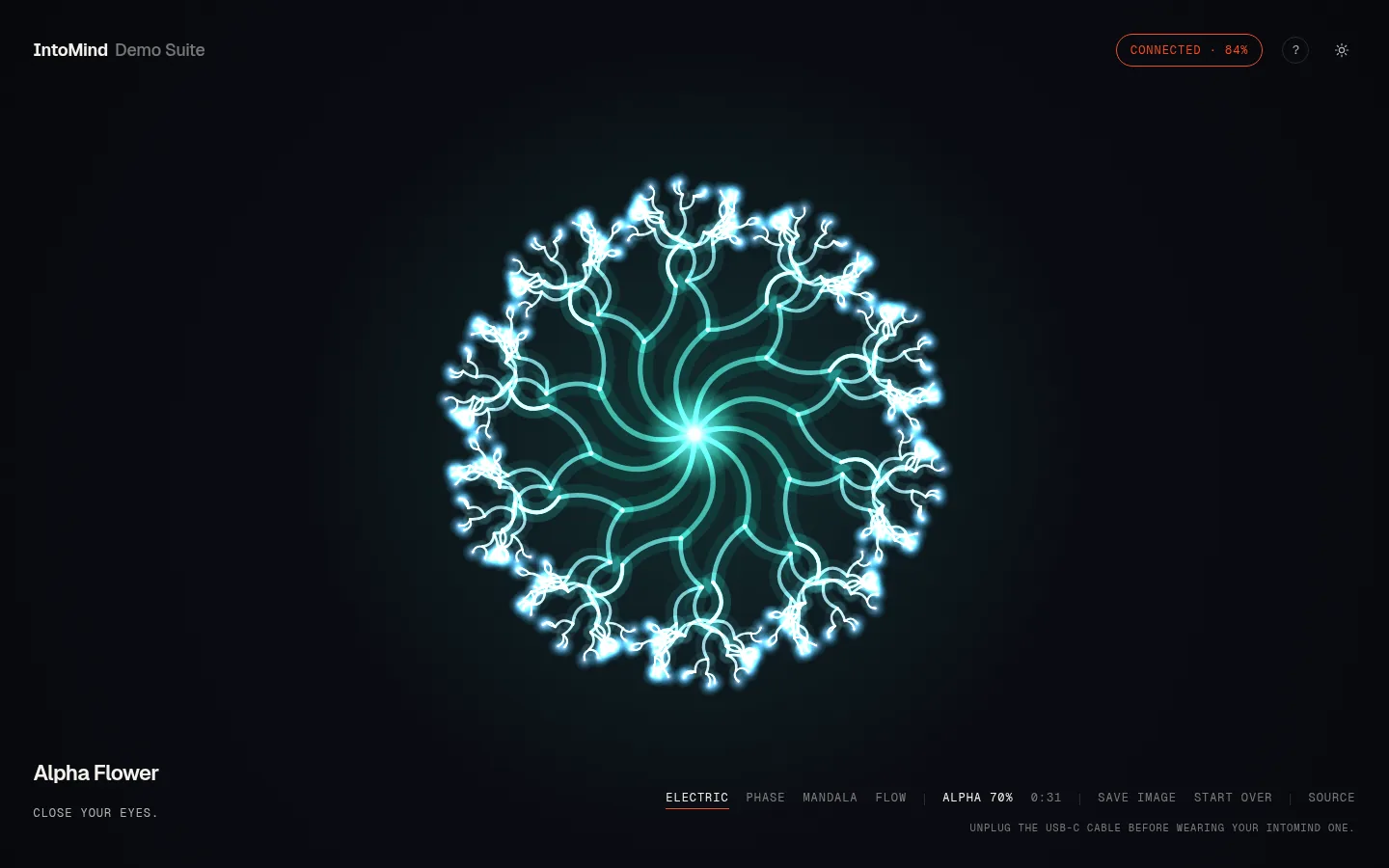
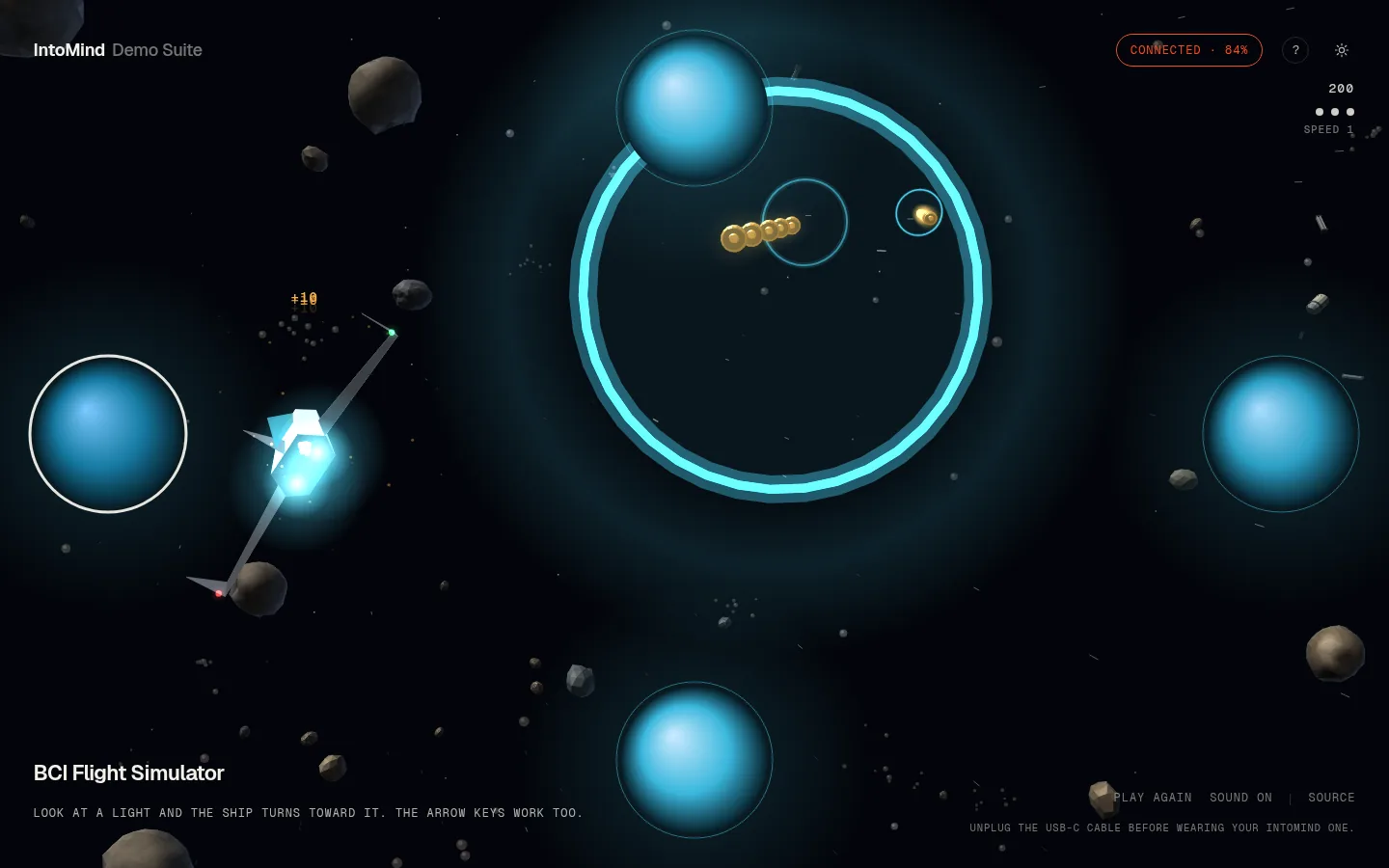
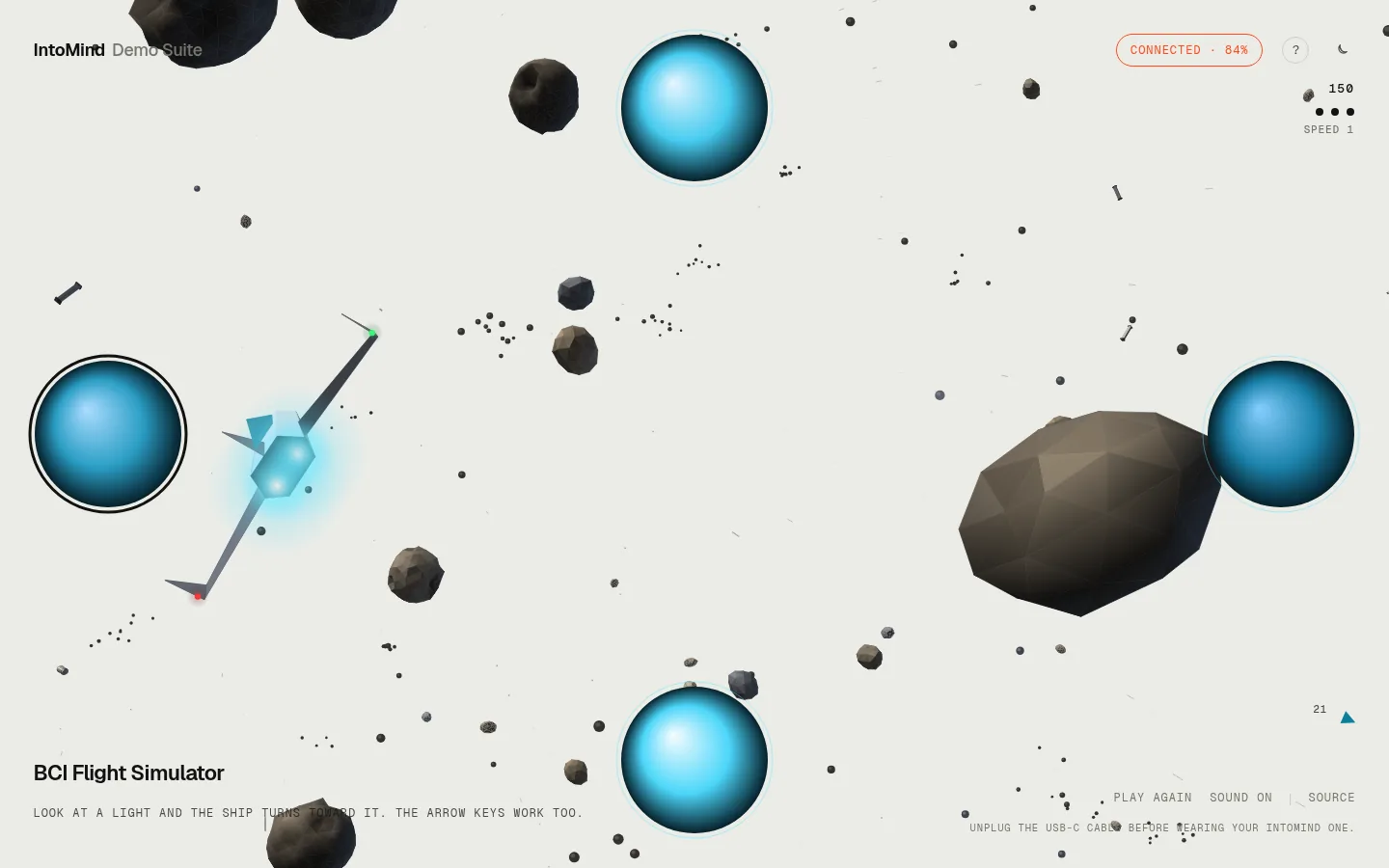
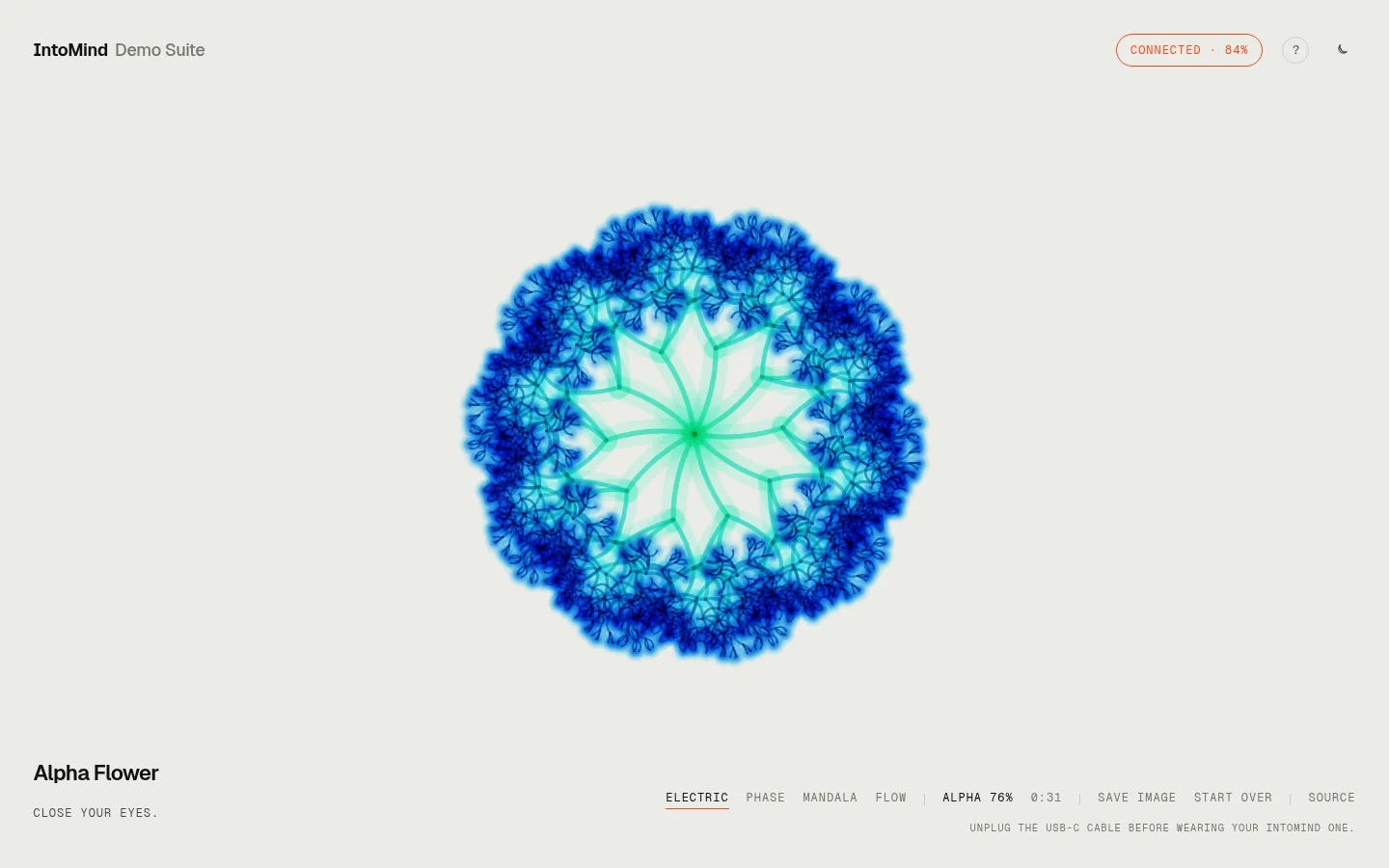 Chapter 3Signal and noiseBlinks and clenched jaws make signals too. How to tell them from your brain's.Lab 2BCI Flight SimulatorSteer a ship by looking at flickering lights, read from the back of your brain.
Part 2
Bits
Computers that learn from brain signals.
Part 3
Real-world outcomes
From a thought to a light on a board.
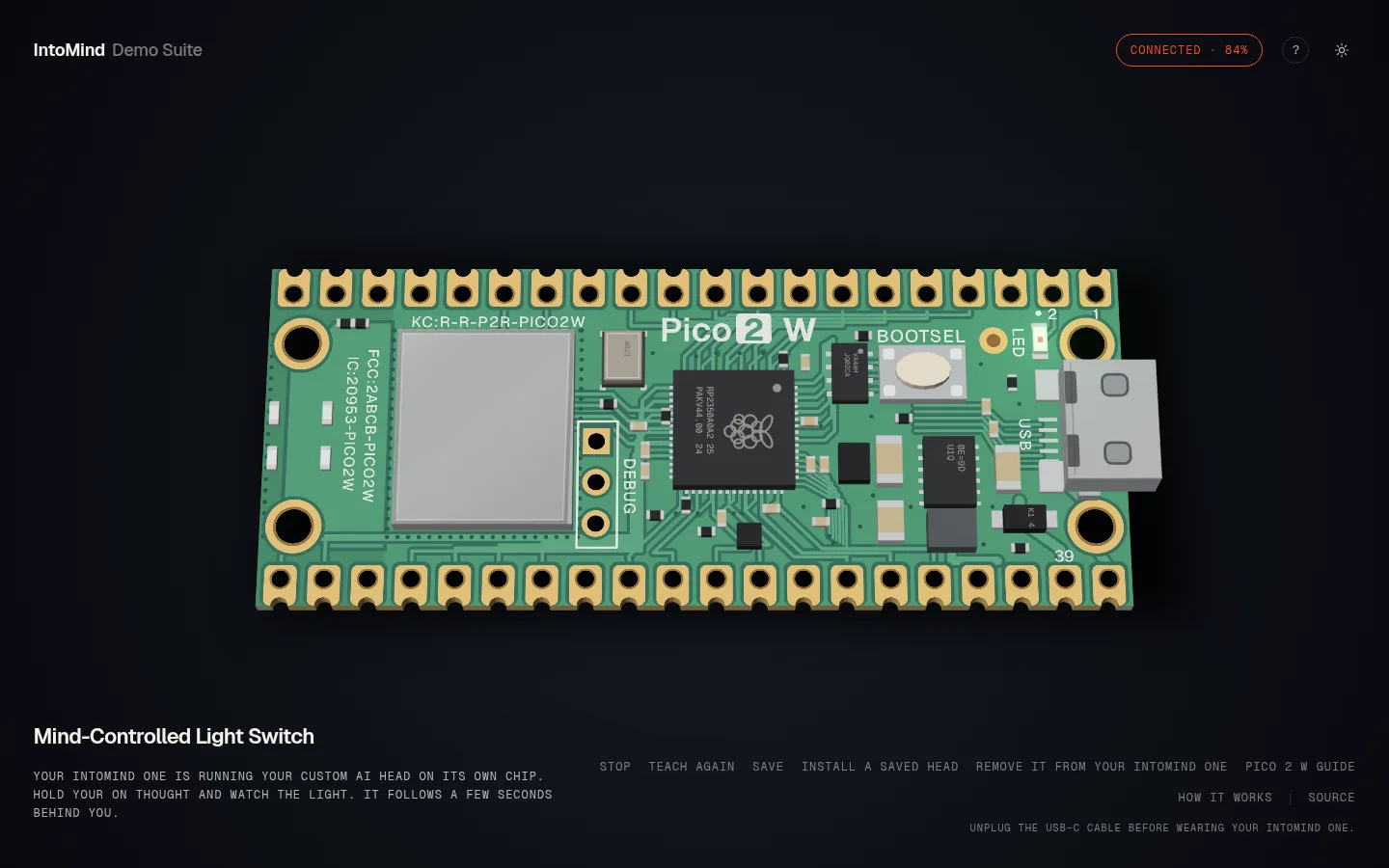
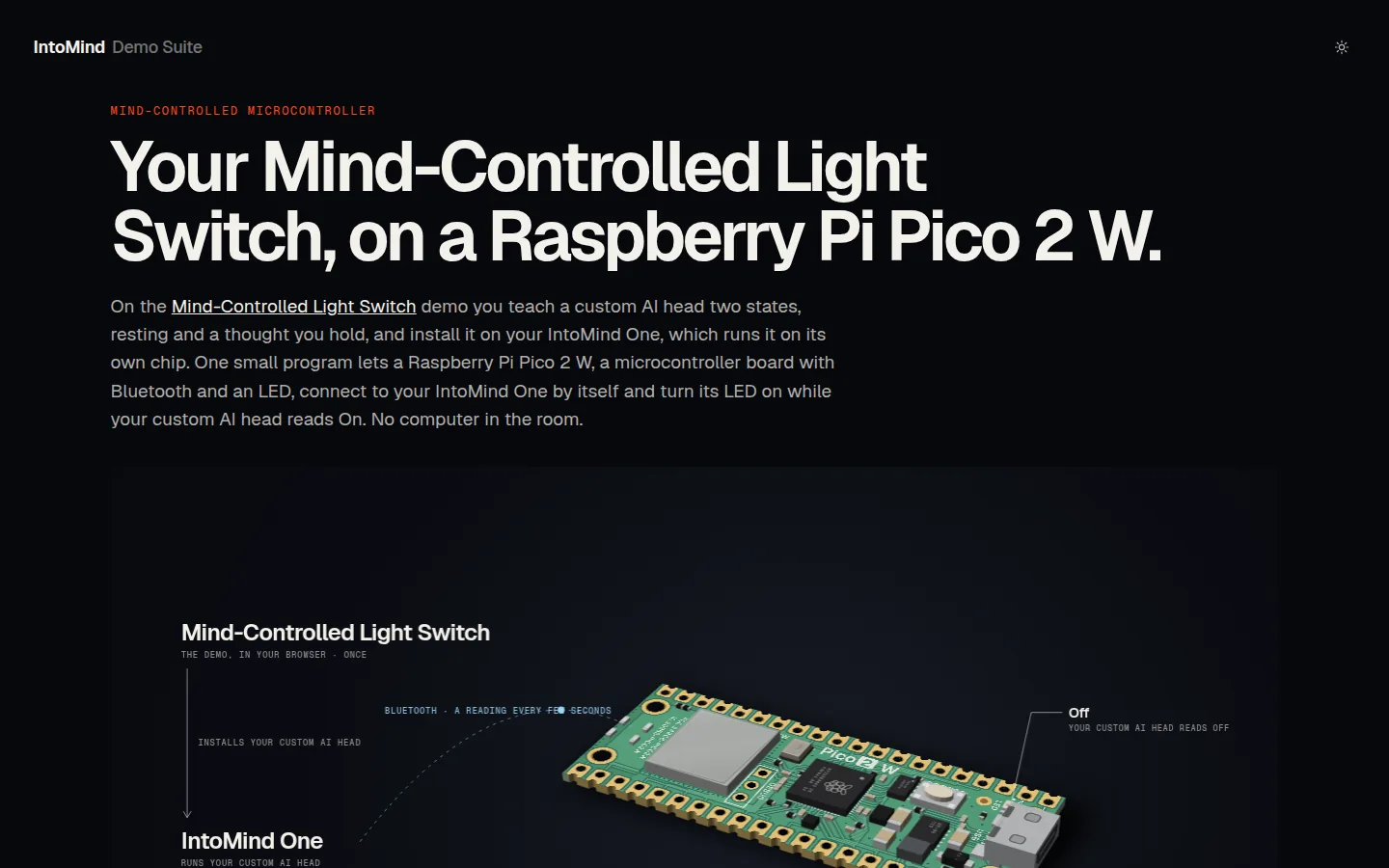
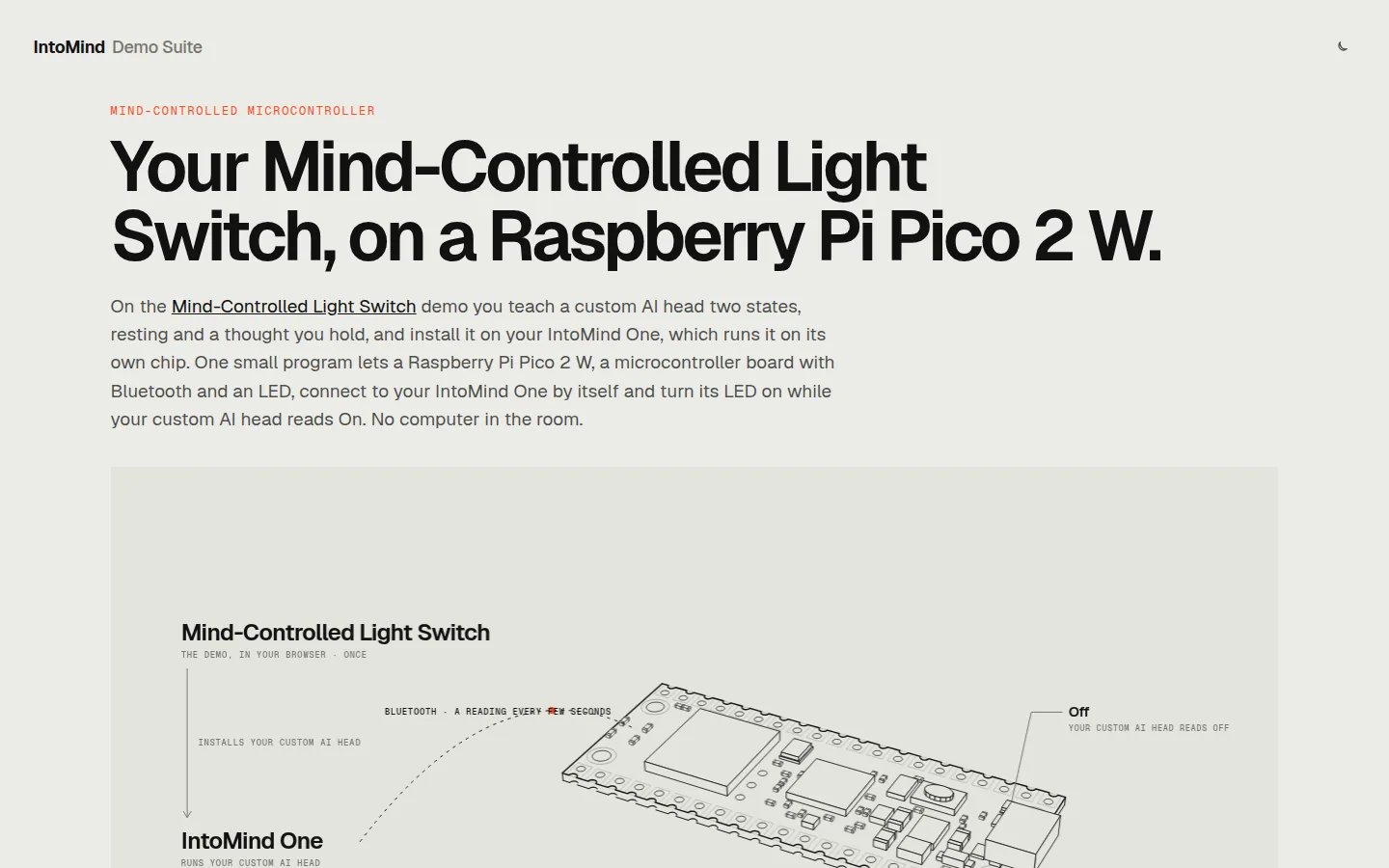
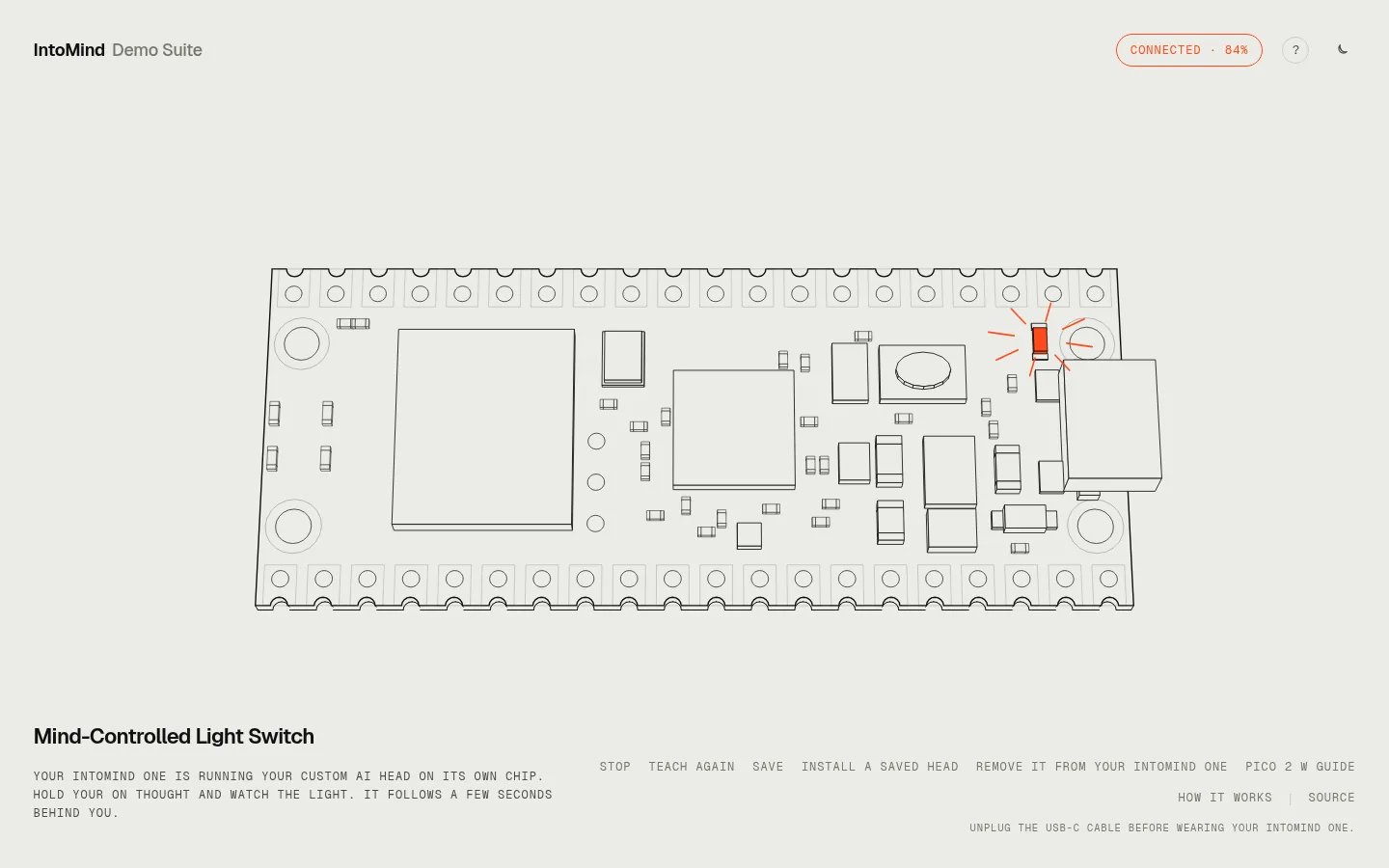 Chapter 7Microcontrollers and circuitsWhat a microcontroller is, and how to light an LED from one.Lab 5Mind-Controlled MicrocontrollerYour custom AI head switches a light on a small board, with no computer in the room.
 Chapter 8Designing a BCIPlan a brain-computer interface for a real need, and a fair test for it.Chapter 9The capstoneBuild your own two-state brain-computer interface, test it, and show it.
High school
BCI101: An Applied Introduction to Noninvasive Brain-Computer Interfaces
Neurons, to bits, to real-world outcomes.
Record your own brain's electricity, find out what an AI model on the device can and can't tell from it, teach a model two of your own mental states, test it fairly, and use it to switch a pin on a board.
Contents
Part 1
Neurons
How the brain makes a signal you can measure from the scalp.
Chapter 3Signal and noiseArtifacts from eyes and muscles, and how to tell a real difference from the spread.Lab 2BCI Flight SimulatorSteer by looking at flickering lights: how the visual cortex follows a flicker, and how a decoder reads it.Part 2
Bits
Models that learn from brain signals, and how to test them fairly.
Part 3
Real-world outcomes
From a decision on the device to a pin on a board.
Chapter 8Microcontrollers and circuitsPins, current and resistors, and a program that drives an LED from a microcontroller.Lab 5Mind-Controlled MicrocontrollerYour custom AI head switches a board's pin, with no computer in the loop.Chapter 9Designing a BCIPlan a brain-computer interface for a real need, with requirements and a test written first.Chapter 10The capstoneBuild your own two-state brain-computer interface, test it against the test you wrote first, and present it.College
BCI101: An Applied Introduction to Noninvasive Brain-Computer Interfaces
Neurons, to bits, to real-world outcomes.
Record your own brain's electricity and analyze it in your own code, test what an AI model on the device can and can't tell from it, teach a model two of your own mental states and test it against chance, then close the loop on a board you program.
Contents
Part 1
Neurons
The signal from neurons to the scalp, and the spectrum that takes it apart.
Chapter 3Signal and noiseSignal-to-noise ratio, the spectral signatures of blinks, muscle, movement and line noise, and when to avoid, reject or correct them.Lab 2BCI Flight SimulatorFrequency tagging, the demo's score rebuilt in code, and the information rate a faster decision buys.Part 2
Bits
Models that learn from brain signals, evaluated against chance, baselines and their own uncertainty.
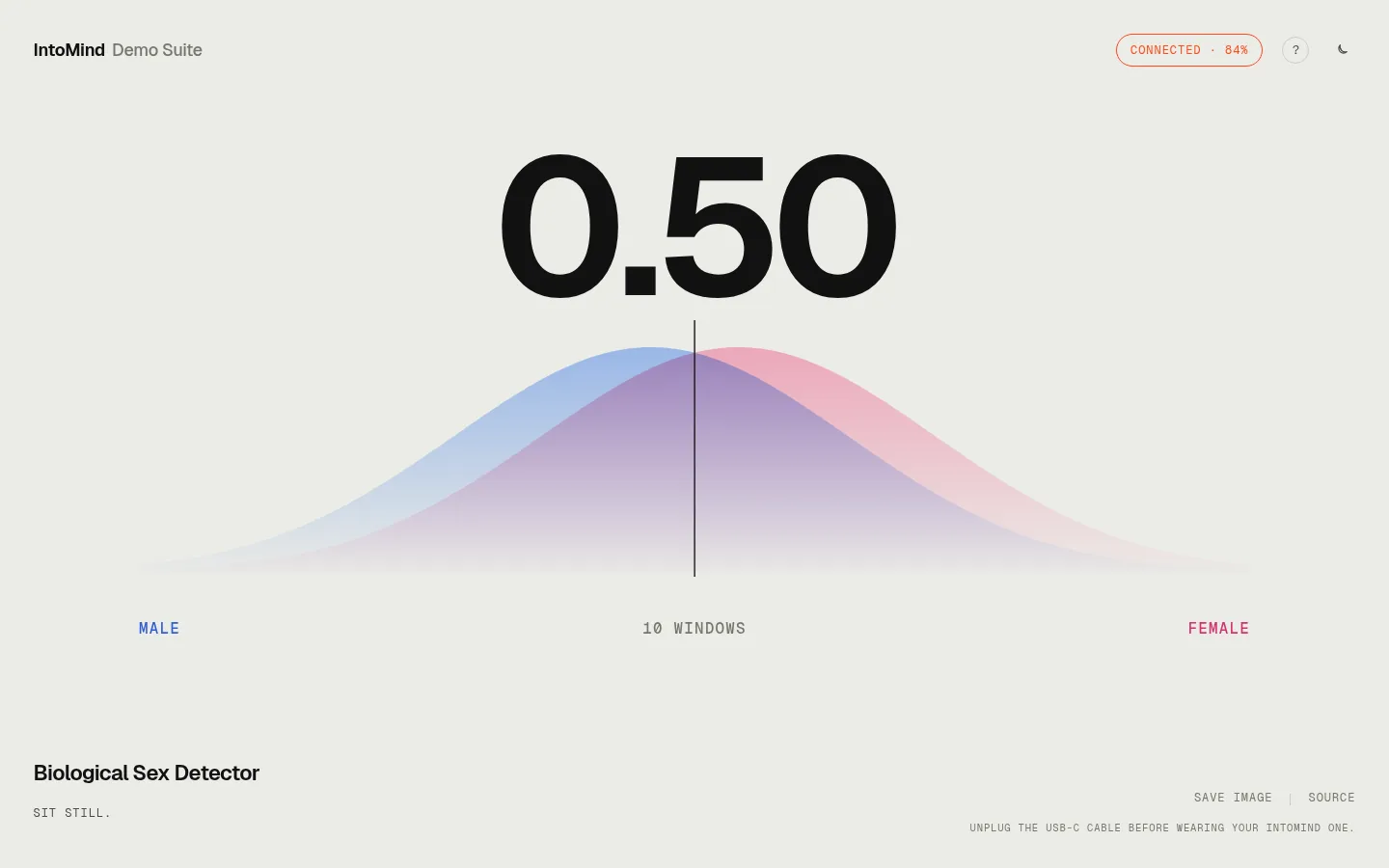
Lab 4Biological Sex DetectorWhat a score means when two groups overlap far more than they differ.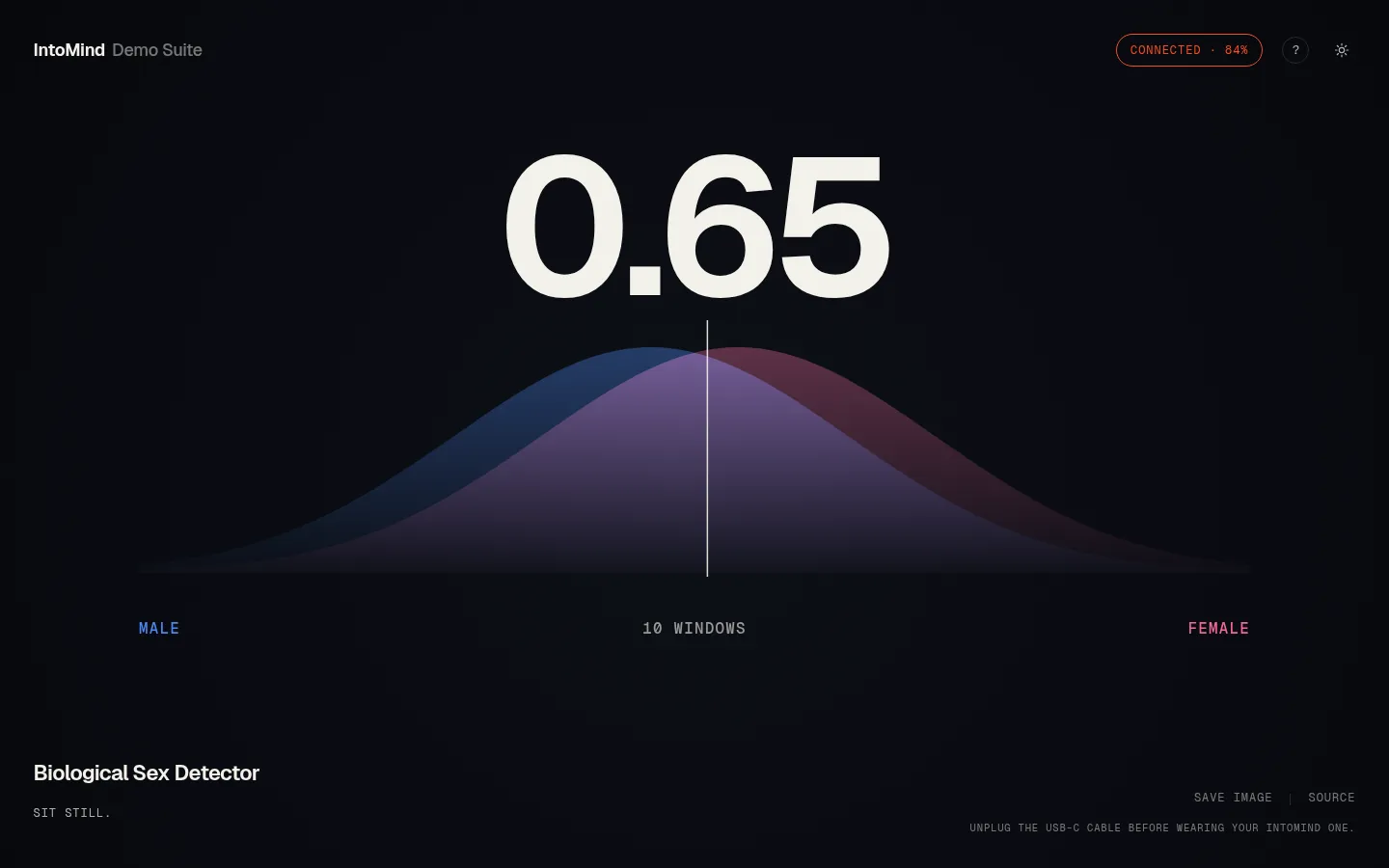
Part 3
Real-world outcomes
A closed loop from a decision on the device to a pin, and a study of your own.
Chapter 9Microcontrollers and circuitsA pin and Ohm's law, Bluetooth Low Energy from advertising to indications, pairing and its threats, and a loop's latency.Lab 6Mind-Controlled MicrocontrollerA MicroPython program closes the loop on a board's pin, and ten timed calls test a model of the delay.Chapter 10Designing a BCIUser-centered design, requirements a test can check, and a threshold chosen by what each mistake costs.Chapter 11Research methodsHypotheses, power, preregistration, and reporting that someone else can repeat.Chapter 12The capstoneFrom a user's need to a working board: requirements, a preregistered test, two sessions, a reproducible analysis, and the loop measured.Graduate
BCI101: An Applied Introduction to Noninvasive Brain-Computer Interfaces
Neurons, to bits, to real-world outcomes.
Take six working brain-computer interfaces apart on your own EEG: what each computes, with which parameters, what it leaves out, and how it holds up against the literature and a fair test. Then preregister and run a study of your own.
Contents
Part 1
Neurons
Generators and the forward model, and spectral estimates with their bias and variance.
Chapter 3Signal and noiseThe noise floor and interference, artifacts with their signatures, what filters cost, and what four channels can't separate.Lab 2BCI Flight SimulatorThe demo's decoder rebuilt, canonical correlation and bits a minute against the window, and the half-field test at O1 and O2.Part 2
Bits
Linear decoders on a pretrained encoder, tested against dependence, baselines and where the data came from.
Lab 4Biological Sex DetectorWhat an AUC near 0.6 implies and where averaging stops, confounds simulated and adjusted, and a design that could tell brain from contact.Part 3
Real-world outcomes
A closed loop's latency and attack surface, requirements set by users, and a preregistered study.
Chapter 9Microcontrollers and circuitsThe board's program and its fail-safes, delay as a distribution, false switches per hour, and a threat model for the loop.Lab 6Mind-Controlled MicrocontrollerThe loop timed on the board's own clock against the window model, false switches at rest with their bounds, and the board's prefix tested.Chapter 10Designing a BCIUsers and testable requirements, metrics that mean something, the operating point by expected cost, and the no-control state.Chapter 11Research methodsEstimands and designs, power at two levels and exaggerated effects, preregistration and registered reports, and reporting others can reproduce.Chapter 12The capstoneA question of your own as a registered report: reviewed before the data, tested as planned, and reproduced by another group.